
Gaming
Connector HSSGamepad: A Clear Guide to Setup, Modes, and Compatibility

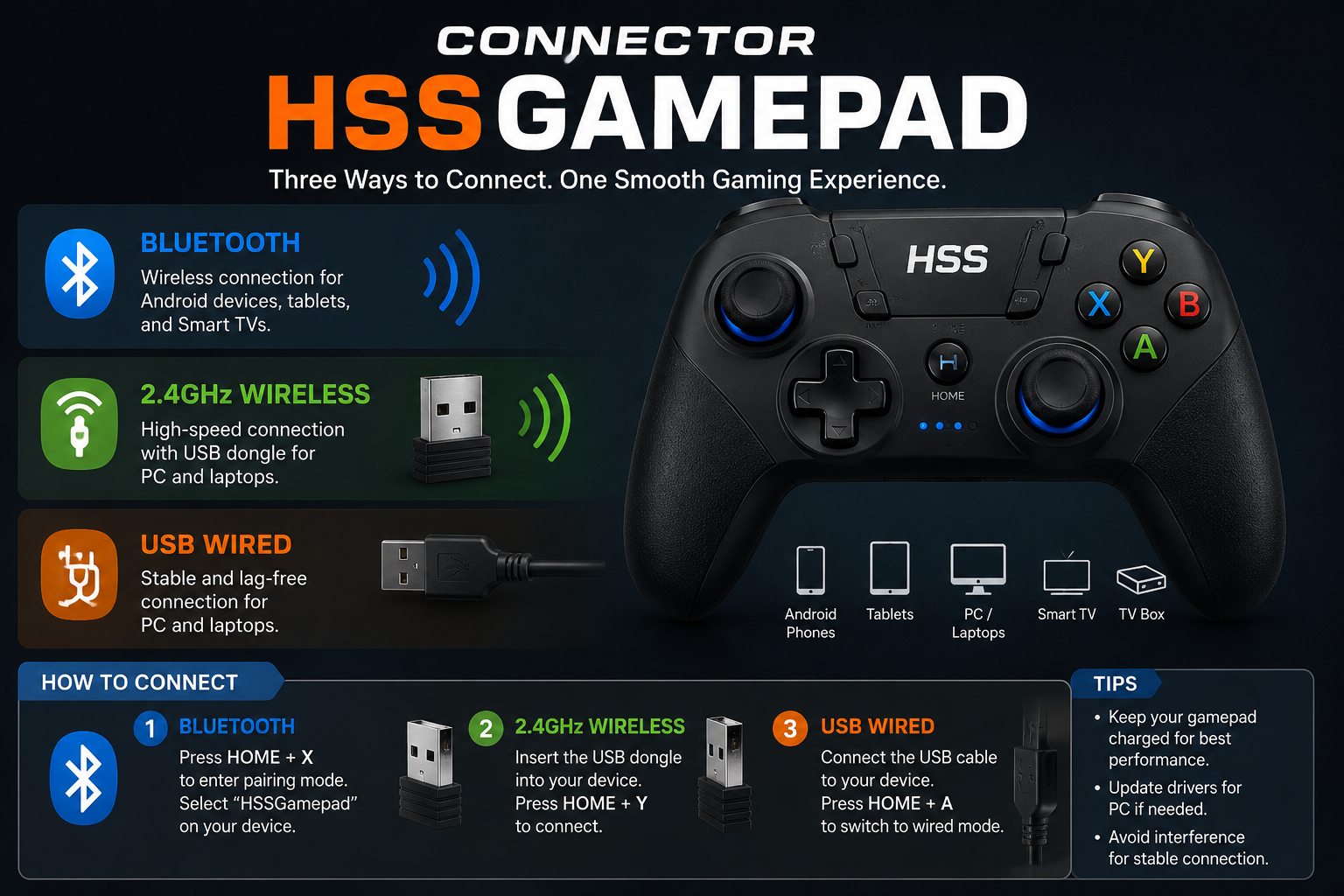
Connector HSSGamepad is the link between the controller and the device The right connection can improve stability, responsiveness, and compatibility This guide breaks down the main modes, setup choices, and troubleshooting steps.
Quick Bio
| Feature | Details |
|---|---|
| Core Definition | Connector HSSGamepad refers to the physical or wireless interface used to connect an HSS Gamepad to a device. |
| Origin | The term appears in recent HSSGamepad-focused guides and support content, where it is used as a practical label for controller connectivity. |
| Primary Use | To link the gamepad to phones, tablets, PCs, and other compatible devices for gameplay. |
| Industry | Gaming hardware and controller connectivity. |
| Common Materials | USB cables, USB-C or Micro-USB leads, Bluetooth radios, and 2.4GHz USB dongles. |
| Popular Applications | Mobile gaming, PC gaming, TV-box play, and general multi-device controller use. |
What Connector HSSGamepad Means
Just picture this: hssgamepad is how your game controller talks to whatever gadget you’re using. Sometimes it’s a cord doing the job. Other times, Bluetooth handles the handshake between gadgets. Or maybe a special plug-in piece makes the whole thing work smoothly.
Because of how it’s built, the connector affects response time, steady operation, energy flow, and whether devices work together. Put simply, this piece isn’t just minor – it plays into how well the controller runs.
Why the Connector Matters for Gameplay
A good connection keeps button presses feeling immediate and reduces the chance of random disconnects. The HSSGamepad guides repeatedly frame connection quality as the difference between smooth play and frustrating lag.
For competitive play, stability often matters more than convenience. For casual play, ease of pairing may matter more, which is why connector hssgamepad is best understood as a choice, not a single fixed part.
The Three Main Connection Paths
The most consistent description of the HSSGamepad ecosystem is that it supports Bluetooth, 2.4GHz wireless, and USB wired mode. That three-mode setup is the core of the user experience.
Bluetooth
Bluetooth is the most flexible option because it does not need extra hardware. It works well for phones, tablets, and laptops that already have Bluetooth built in.
The tradeoff is that Bluetooth can be more sensitive to interference or device settings. If battery-saving tools restrict background activity, the connection may become less reliable.
2.4GHz Wireless Dongle
The 2.4GHz receiver is usually the preferred wireless option for PC gaming. The guides describe it as faster and more stable than standard Bluetooth, with less chance of interference.
This mode is especially useful when you want a cleaner desk setup without giving up responsiveness. It sits in the middle ground between convenience and performance.
USB Wired Mode
USB wired mode is the most direct path and the simplest to troubleshoot. The available guides describe it as the zero-interference option and the one most likely to work when wireless pairing fails.
It is a strong choice for competitive games, long sessions, or any setup where reliability matters more than freedom of movement.
Devices That Commonly Work
The HSSGamepad materials describe support for Android phones and tablets, Windows PCs, laptops, smart TVs, and Android TV boxes. Compatibility is strongest on Android and Windows.
That said, compatibility still depends on the connection mode and the device’s own controller support. A controller can be technically connected and still need mapping or driver support in a game.
Materials, Ports, and Build Considerations
For a connector hssgamepad setup, the physical side usually comes down to the port and cable type. The sources mention USB-A, USB-C, and Micro-USB cables, plus wireless dongles for 2.4GHz mode.
USB-C is presented as a more modern choice because of its reversible design and stronger power/data convenience. USB-A remains common, especially on older devices and many PCs.
How Setup Usually Works
The safest setup pattern is simple: charge the controller, select the right mode, and pair directly with the target device. The guides recommend starting with a direct port, then confirming the device recognizes the controller.
For Bluetooth, the usual flow is to enable pairing mode, open the device’s Bluetooth menu, and select the controller when it appears. For wired mode, the controller may auto-detect, or it may need a mode button depending on the model.
Which Mode Makes the Most Sense
Most folks using phones find Bluetooth just works without fuss. When it comes to PCs, a 2.4GHz connection tends to hold up better over time. For those who hate surprises, plugging in removes most headaches straight away.
That is the real decision behind connector hssgamepad: not “What cable should I buy?” but “Which connection fits my device and play style?”
Common Connection Problems
Most connection problems come from a small set of causes: low battery, incorrect pairing mode, old device pairings, weak ports, outdated drivers, or wireless interference. The support content repeatedly points to these same issues.
A controller may also fail to connect if it is already attached to another device. Forgetting old pairings and starting fresh is often one of the fastest fixes.
Troubleshooting Checklist
A practical fix sequence is: charge the gamepad, confirm pairing mode, disconnect it from previous devices, test the cable or USB port, and update drivers if needed. That sequence is directly aligned with the published troubleshooting guidance.
If you are using wireless mode, reducing nearby Bluetooth and Wi-Fi noise can also help. If the issue continues, switching to wired mode is the cleanest way to isolate the problem.
Stability Tips for Better Play
Keeping the dongle stored safely, using a direct USB port, and avoiding unnecessary hubs can improve reliability. The connector is only as good as the weakest link in the chain.
Another smart habit is to treat firmware and driver updates as part of maintenance, not as an afterthought. The published guides specifically note that updates can improve compatibility and reduce bugs.
Mobile, PC, and TV Use Cases
On mobile, Bluetooth usually offers the quickest setup and the least friction. On PC, 2.4GHz or USB tends to deliver the smoother gaming feel, especially when responsiveness matters.
For TV boxes and living-room setups, wireless dongles are appealing because they avoid cable clutter while still keeping a stable link. That is where connector hssgamepad becomes a practical living-room choice, not just a technical term.
Future Trends in Gamepad Connectivity
The direction is clear: more flexible connections, simpler pairing, and stronger support across devices. The emphasis on USB-C, wireless dongles, and multi-mode support suggests that users want fewer compromises and less setup friction.
The most likely next step is better automatic switching between modes and cleaner compatibility across platforms. That would make connector hssgamepad feel less like a troubleshooting topic and more like an invisible part of the gaming experience.
Conclusion
Connector HSSGamepad is best understood as the controller’s connection system, not just a cable or a single port. Once you match the mode to your device, most of the confusion disappears.
Use Bluetooth for convenience, 2.4GHz for stable wireless play, and USB wired when you want the most reliable connection. That simple choice can make a noticeable difference in how the controller feels in real play.
FAQs
1) What is connector hssgamepad?
It is the physical or wireless connection used to link an HSS Gamepad to a device such as a phone, PC, tablet, or TV box. It can mean Bluetooth, a USB cable, or a 2.4GHz dongle depending on the setup.
2) Which connection mode is best for PC gaming?
For most PC setups, 2.4GHz wireless or USB wired mode is the better choice. The guides describe 2.4GHz as stable and wired mode as the most reliable option overall.
3) Why does my HSS Gamepad keep disconnecting?
Common causes include low battery, old pairings, wireless interference, or outdated drivers. Starting with a fresh pairing and testing wired mode usually helps narrow it down fast.
4) Does connector hssgamepad work on Android phones?
Yes, Android phones are listed among the supported devices. Bluetooth is the most common method for phones, while USB can work on some Android devices with OTG support.
5) How do I make the connection more stable?
Use the right mode for the device, keep the controller charged, avoid unnecessary wireless interference, and use a direct USB port when wired. Updating drivers or firmware can also improve reliability.

Eurogamersonline.com console gaming is best understood as an information-focused part of Eurogamersonline.com for people who want to understand consoles, games, accessories, display technology, and buying decisions without getting buried in unnecessary technical jargon. The website currently features dedicated sections for Console Gaming, PC Gaming, and Gadgets, while its homepage positions console guides as one of its central areas of coverage.
That focus is especially relevant in 2026. Console players now have more choices than simply deciding between PlayStation and Xbox. PlayStation 5 and PS5 Pro target different performance expectations, Xbox Series X and Series S serve different budgets and media preferences, and Nintendo Switch 2 expands the hybrid-console category. Meanwhile, subscriptions, digital libraries, backward compatibility, storage costs, refresh rates, regional availability, downloadable content, cross-play, and online services increasingly influence which console makes sense for an individual player.
What Is Eurogamersonline.com console gaming?
Eurogamersonline.com console gaming refers to the console-focused coverage available through Eurogamersonline.com. Instead of being a gaming console itself, the website functions as an informational resource covering subjects connected with console ownership and gaming setups.
This distinction is important because some third-party pages describe Eurogamersonline as though it were a dedicated gaming system or gaming platform. The live Eurogamersonline.com website, however, is organized as a content site. Its main navigation currently includes Home, Console Gaming, PC Gaming, Gadgets, Meet The Crew, and Contact Us.
The site’s existing console-related material addresses practical subjects such as choosing systems for European markets, understanding regional settings, comparing subscription value, considering storage requirements, evaluating DLC compatibility, checking online latency, and improving television setups.
That makes the site’s potential usefulness less about simply reporting gaming news and more about helping readers connect technical specifications with actual purchasing and playing decisions.
How Eurogamersonline.com console gaming Fits the 2026 Market
The console market has become more fragmented than it once was. A buyer may now choose between a standard console, a higher-performance model, a lower-cost digital system, or a portable hybrid machine.
Sony currently offers the PS5 family alongside PS5 Pro. Sony describes PS5 Pro as offering features such as advanced ray tracing, sharper image quality on compatible 4K televisions, and higher frame-rate capabilities in supported titles. The system also includes 2TB of built-in storage.
Microsoft continues to position Xbox Series X as its higher-performance Series console while Series S offers a disc-free alternative. Microsoft states that Series X targets native 4K gaming and can support up to 120 frames per second in compatible games and displays. Series S is designed around digital gaming and targets 1440p, with support for upscaling to 4K.
Nintendo Switch 2 adds another choice for players who value portability and local multiplayer alongside television play. Nintendo states that Switch 2 can run compatible physical and digital Nintendo Switch software in addition to games designed for Switch 2.
For readers, this means a useful console guide must go beyond simply declaring one machine the “best.” The correct choice depends on the games someone wants, where they play, what display they own, whether they purchase physical media, and how much they want to spend over several years.
Why Console Choice Is More Complicated Than Specifications
Comparing processors, storage capacity, graphical performance, and resolution can be useful, but technical specifications do not automatically reveal which console provides the better experience.
A person who primarily plays first-party Nintendo games has very different needs from someone building a large digital Xbox library. Likewise, a gamer with a premium 4K 120Hz television may benefit more from high-performance features than someone using an older 1080p display.
Eurogamersonline.com’s own console coverage highlights factors such as regional availability, payment options, server location, language support, subscription differences, DLC regions, game libraries, and storage.
Those considerations matter because a console is effectively an ecosystem rather than a single piece of hardware. Once games, controllers, digital purchases, cloud saves, accessories, and subscriptions accumulate, moving to another platform becomes a bigger decision.
PlayStation Gaming in the Current Console Landscape
PlayStation remains one of the major console ecosystems, with the PS5 range covering mainstream and performance-focused buyers.
The standard PS5 provides access to the PS5 game library, while PS5 Pro is aimed at players who care more strongly about graphical quality and performance. Sony highlights enhanced ray tracing, higher frame rates in supported games, improved image clarity, and its PSSR image-upscaling technology as major PS5 Pro features. Sony announced an upgraded version of PSSR in February 2026 for rollout to PS5 Pro systems.
The practical question is whether those improvements matter to the individual player.
Someone using a large 4K display and playing visually demanding titles may place greater value on advanced rendering features. Someone interested mainly in casual gaming or titles that already perform well on a standard PS5 may receive less benefit from paying extra for premium hardware.
Another consideration is physical versus digital ownership. This is becoming increasingly significant as game distribution continues evolving. Buyers should therefore evaluate not just console price but also how they prefer to build and maintain their game libraries.
Xbox Series X and Series S: Different Routes Into Xbox Gaming
Microsoft approaches the console market differently by maintaining both Series X and Series S models.
Xbox Series X is designed for players seeking higher graphical performance, larger storage options, and—in disc-equipped versions—physical media support. Microsoft’s current specifications highlight native 4K gaming, frame rates reaching up to 120 FPS in supported content, Quick Resume, hardware-accelerated graphical features, and expandable storage.
Xbox Series S serves a different audience. It is a digital-only machine designed around 1440p output with 4K upscaling and comes in different storage capacities depending on the configuration.
Neither approach is automatically better.
A player with a large television, interest in physical discs, and a desire for stronger visual performance may lean toward Series X. Someone prioritizing lower entry cost, digital purchases, and a smaller console may find Series S more suitable.
Eurogamersonline.com’s existing console guide also points to Xbox Game Pass and backward compatibility as factors worth considering when comparing systems.
Nintendo Switch 2 Changes the Hybrid Console Conversation
Nintendo Switch 2 gives console buyers another type of experience because it combines handheld and television-based gaming.
Nintendo describes the machine as an upgraded successor to Switch and supports compatible software from the original Nintendo Switch ecosystem.
The hybrid design matters because performance is not the only priority for every gamer. Portability, family play, local multiplayer, exclusive franchises, and the ability to continue playing away from a television can be more valuable than chasing the highest graphical settings.
Nintendo has also introduced features around communication and social play on Switch 2. GameChat supports voice communication and screen sharing, while compatible camera accessories can add video functionality where supported. These online features require appropriate accounts, services, internet access, and compatible hardware.
For buyers researching Switch 2 through console guides, the most useful comparison is therefore not simply “Is it more powerful than PlayStation or Xbox?” A better question is whether its style of gaming matches how the person actually wants to play.
Display Technology Matters More Than Many Buyers Realize
Buying an expensive console without considering the television or monitor attached to it can leave a significant portion of its capabilities unused.
Eurogamersonline.com’s gaming-TV guidance recommends evaluating 4K resolution, HDR support, native 120Hz refresh rates, HDMI 2.1 connectivity, Variable Refresh Rate, Auto Low Latency Mode, and input lag when building a modern console setup.
These terms have practical consequences.
A higher refresh rate can make compatible games appear smoother. VRR can reduce visible problems caused by mismatches between console frame output and display refresh. ALLM allows compatible equipment to automatically switch into a lower-latency gaming mode. HDR can improve brightness range and visual contrast when implemented effectively.
Microsoft also notes that 4K gaming at 120Hz requires supported content and a compatible display, illustrating why console specifications and television specifications should be considered together.
Rather than buying a television simply because “4K” appears on the box, console players should examine the complete feature set.
Storage Is Becoming Part of the Real Cost of Gaming
Modern games can consume significant amounts of storage, which makes available SSD space an important ownership consideration.
A console may look affordable initially but become more expensive if the user quickly needs additional storage. This is why storage should be considered alongside games, subscriptions, controllers, headsets, charging equipment, and display upgrades when estimating the true cost of a setup.
Xbox Series X|S supports dedicated expansion-card solutions that are designed to maintain the console’s custom SSD performance for compatible games. PS5 and PS5 Pro buyers should similarly evaluate how much usable space their game library will require rather than choosing hardware based entirely on headline performance.
This becomes particularly important for players who rotate between several large games instead of uninstalling and downloading titles repeatedly.
Digital Games Versus Physical Games
The debate between physical and digital ownership has become central to console buying.
Digital libraries offer convenience. Games can be purchased and downloaded without changing discs, and digital-only hardware can sometimes simplify the console design.
Physical media, however, can appeal to people who collect games, purchase used copies, share compatible discs within a household, or prefer owning tangible editions.
The important point is to decide on this preference before selecting hardware. Xbox Series S, for example, is designed for digital-only gaming. PS5 buyers also have disc and digital hardware choices, while PS5 Pro supports an optional disc drive rather than including one as standard.
The cheapest console on day one may therefore not be the cheapest or most convenient console over several years.
Regional Factors for European Console Gamers
The “Euro” aspect of Eurogamersonline.com makes regional purchasing considerations particularly relevant.
Its console guidance highlights VAT, payment methods, store regions, DLC compatibility, server location, local language support, warranty considerations, and regional differences in online services.
These are easily overlooked when shoppers compare consoles using global specification sheets.
A game may be available across Europe while certain downloadable content, payment methods, promotional bundles, or support options differ by country. Online latency can also depend partly on network infrastructure and server location.
For European buyers, therefore, checking local availability and regional support before purchasing imported hardware or digital content is sensible.
Online Gaming, Subscriptions and Cross-Platform Play
Hardware is only one part of modern console ownership. Online ecosystems now influence multiplayer access, game discovery, cloud services, downloadable libraries, and social features.
Xbox promotes Game Pass as part of its wider gaming ecosystem, while Nintendo uses Nintendo Switch Online for supported online functionality. PlayStation similarly operates subscription-based online services within its ecosystem. Xbox also supports features such as Remote Play and cloud gaming in supported circumstances.
The ideal subscription depends on what someone actually plays.
A large catalogue has little value if the user does not enjoy the available games. Conversely, players who frequently try new titles may find a subscription more cost-effective than repeatedly purchasing individual releases.
Cross-play should also be checked game by game. A player choosing a console primarily to play with friends should confirm where those friends play and whether the intended titles support multiplayer across different platforms.
Accessories Can Change the Gaming Experience
Controllers, headsets, storage devices, charging systems, racing wheels, cameras, and other accessories can transform the overall cost and usefulness of a console.
Nintendo, for example, offers Switch 2-specific accessories including controllers, cameras, carrying cases, and other peripherals. PlayStation similarly promotes additional DualSense-family controllers and gaming audio accessories for the PS5 ecosystem.
The smartest approach is to avoid buying accessories simply because they are marketed as part of a “complete setup.”
Start with the games you actually play. A competitive racing fan might receive meaningful value from a wheel. A multiplayer-focused player may prioritize a headset. Someone who frequently travels with a Switch 2 could value protection and portable charging more than premium home accessories.
Buying around real use cases usually produces a better setup than buying around appearance.
How to Use Eurogamersonline.com for Better Console Decisions
The strongest way to use Eurogamersonline.com is as one research layer rather than treating any single gaming publication as the final authority.
Its console-focused content can help readers identify questions they should ask about game libraries, regions, storage, television compatibility, subscriptions, DLC, latency, and accessories.
After identifying those factors, important specifications should be cross-checked against official PlayStation, Xbox, or Nintendo documentation—particularly before purchasing expensive hardware.
This combination is useful because editorial guides explain practical implications while official manufacturer pages confirm current technical details.
What Makes a Good Console Gaming Guide in 2026?
A genuinely useful console article should do more than publish specification tables or repeat marketing language.
It should explain who a product suits, what limitations matter, which additional expenses may appear later, what television features are required to benefit from advanced performance, whether physical games work, how storage expansion operates, what subscriptions may be required, and how regional restrictions affect the buyer.
That approach aligns naturally with the topics currently visible across Eurogamersonline.com’s console and television guidance.
Readers do not need another article telling them that PS5, Xbox, and Nintendo are popular. They need enough context to choose correctly.
Conclusion: Is Eurogamersonline.com console gaming Useful?
Eurogamersonline.com console gaming can be useful as a starting point for people researching console hardware, gaming displays, accessories, regional considerations, subscriptions, and purchasing decisions. The live site is clearly organized around gaming-related editorial content rather than functioning as a standalone console or game service.
Its most useful direction is practical guidance. Console gaming in 2026 is no longer simply a contest over which box has the strongest specifications. PlayStation, Xbox, and Nintendo now serve different combinations of performance expectations, exclusive software, portability, digital ownership, subscriptions, backward compatibility, social features, and budgets.
The smartest buyer should begin with games and personal habits, then consider hardware. Decide where you want to play, whether physical media matters, what display you already own, which friends or communities you play with, how much storage you need, and what recurring subscriptions you are willing to maintain.
Use gaming publications such as Eurogamersonline.com to understand those decisions, then verify critical specifications through official manufacturer sources before spending money. That approach gives console buyers something more valuable than a simple “best console” ranking: a system that actually fits the way they play.
FAQs About Eurogamersonline.com console gaming
1. What is Eurogamersonline.com console gaming?
Eurogamersonline.com console gaming refers to the console-focused editorial content published on Eurogamersonline.com. The site’s navigation includes a dedicated Console Gaming section alongside PC Gaming and Gadgets. It should therefore be viewed as an information resource rather than a physical gaming console.
2. Does Eurogamersonline.com cover PlayStation, Xbox and Nintendo?
Its console content discusses major console choices and factors relevant to systems such as PlayStation, Xbox, and Nintendo, including regional compatibility, subscriptions, game libraries, storage, and buying considerations. Readers should still verify important hardware specifications with the relevant manufacturer before purchasing.
3. Which gaming consoles are most relevant in 2026?
Major current choices include the PlayStation 5 family and PS5 Pro, Microsoft’s Xbox Series X and Series S, and Nintendo Switch 2. Sony positions PS5 Pro as its performance-focused PS5 model, Microsoft continues to offer both Series X and Series S, and Nintendo currently markets Switch 2 as its newer hybrid system.
4. What should I check before buying a console?
Start with the games you want to play and then evaluate total budget, physical versus digital ownership, storage, online subscriptions, backward compatibility, multiplayer requirements, regional support, controllers, and your television or monitor. For high-refresh-rate gaming, display capabilities such as HDMI 2.1, VRR, low input lag, and 120Hz support can also matter.
5. Can Eurogamersonline.com help with gaming TV selection?
Yes. The site’s gaming-TV guidance discusses console-related display features including 4K resolution, HDR, native 120Hz panels, HDMI 2.1, VRR, ALLM, input lag, viewing distance, and OLED versus LCD considerations. These factors can help buyers match a television more effectively with a modern console.
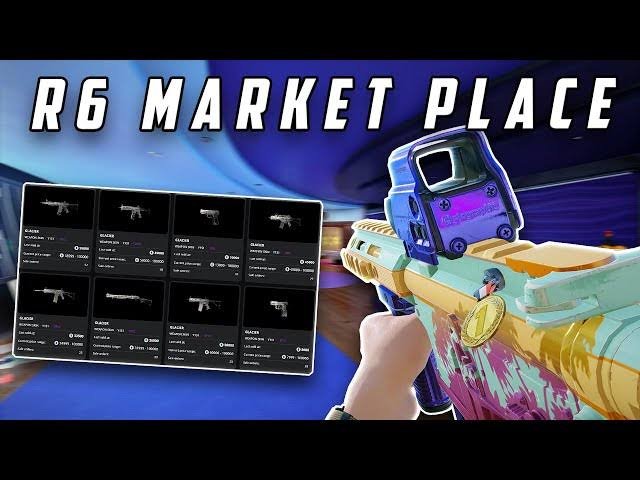
The R6 Marketplace changed how Rainbow Six Siege players viewed unwanted cosmetics, rare skins, and older collectibles.
Instead of leaving unused items in an inventory, eligible users could list them for R6 Credits or order cosmetics they had missed.
However, its status is different in 2026, so players need accurate information before attempting to trade.
Quick Bio
| Feature | Details |
|---|---|
| Official name | Rainbow Six Siege Marketplace |
| Developer and operator | Ubisoft |
| Main purpose | Buying and selling eligible Rainbow Six Siege cosmetics |
| Trading currency | R6 Credits |
| Common item types | Weapon skins, headgear, uniforms, charms, attachment skins, and other eligible cosmetics |
| Original access conditions | Clearance Level 25 and Two-Factor Authentication |
| Seller fee | 10% of the completed sale amount |
| Current status | Closed while Ubisoft rebuilds security and economic systems |
| Latest official update | June 30, 2026 |
| Return date | No confirmed reopening date |
What Is the R6 Marketplace?
The R6 Marketplace is Ubisoft’s official player-to-player trading system for eligible Rainbow Six Siege cosmetics. It allowed players to exchange selected inventory items for R6 Credits and spend those credits on cosmetics offered by other users.
It did not operate like a direct auction where buyers contacted sellers. The platform automatically matched compatible buy and sell orders. Ubisoft described it as a place to exchange unwanted items or find weapon skins from previous seasons. collectors, the system offered a way to search for missed seasonal skins, uniforms, charms, event cosmetics, and other eligible items. Long-term players could also receive credits for tradable content they no longer used.
Is the R6 Marketplace Open in 2026?
As of July 7, 2026, the Marketplace is closed. Ubisoft confirmed on June 30, 2026, that it will remain unavailable while the company works on a safer and more sustainable replacement. No reopening date was announced.
This matters because many older guides still present the platform as active. Those pages may explain its previous features, but players cannot currently use them to complete new transactions.
Ubisoft described the closure as more than routine maintenance. Reopening requires work on account protection, transaction monitoring, pricing behaviour, item circulation, and the wider in-game economy. Players should therefore be cautious of any third-party website claiming to provide active official trading.
Why Did Ubisoft Close the Marketplace?
Ubisoft reported problems involving account theft, bot activity, unauthorized credit transfers, price instability, distorted item circulation, and transactions connected to malicious behaviour.
These issues can damage both security and pricing. A stolen account may contain rare skins or a large credit balance, while automated accounts can place orders faster than normal users. Manipulated transactions can also make item prices less reflective of genuine supply and demand.
Ubisoft says it wants stronger monitoring, better account safeguards, and a trading model that fits within a balanced economy before the feature returns.
How R6 Marketplace Trading Worked
Before the closure, the platform used an order-matching system. Buyers entered the highest amount they were willing to pay, while sellers entered an asking price. A trade completed when the system found compatible orders.
Buying Cosmetic Items
A buyer opened the Buy section, searched for a tradable cosmetic, selected it, and entered a maximum price. The system then looked for the lowest matching sale.
The maximum bid was not necessarily the final amount paid. Ubisoft explained that the system searched for the lowest price compatible with the order. Current-season items were generally unavailable until a later season. example, a player could create a purchase order offering up to 700 R6 Credits for a weapon skin. If a matching seller listed it for 600 credits, the system could complete the order at the lower available price.
Selling Eligible Inventory Items
The Sell section displayed inventory cosmetics that Ubisoft had marked as tradable. If an owned item did not appear, it could not be listed at that time.
A seller selected an item, entered an asking price, and created an order. The listing remained active until it matched, expired, or was cancelled. Ubisoft retained a 10% transaction fee from completed sales. lers therefore needed to consider the fee before choosing a price. Listing an item for a certain amount did not mean the full amount would be added to the account after the transaction.
Managing Orders and History
The My Transactions area showed active purchase orders, sale orders, and previous activity. Users could adjust the price or cancel an unmatched order. Expired orders remained in the history and could be reposted. s automatic structure reduced the need for direct contact, external payments, private messages, or manual item transfers between players.
What Items Could Be Bought and Sold?
The catalogue focused on cosmetic content rather than gameplay advantages. Depending on Ubisoft’s eligibility rules, listings could include:
- Weapon skins
- Operator uniforms
- Headgear
- Charms
- Attachment skins
- Operator card backgrounds
- Portraits and related customization items
Not every owned cosmetic was tradable. Availability depended on the item’s source, age, release period, and Ubisoft’s catalogue rules. Current-season, promotional, newly released, account-bound, or otherwise restricted items could remain unavailable.
An item could therefore be rare without having an active Marketplace listing or resale price. Players could only list cosmetics shown in the official Sell section of their accounts.
Eligibility and Account Requirements
Before the shutdown, Ubisoft required players to reach at least Clearance Level 25 and enable Two-Factor Authentication to access trading. level condition created a basic participation threshold, while Two-Factor Authentication helped protect accounts containing premium currency and valuable cosmetics.
Players also needed an eligible Ubisoft account in good standing. Restrictions, security concerns, or account sanctions could prevent access to certain online services.
A rebuilt system may keep, strengthen, or replace these requirements. Players should check Ubisoft’s official rules at the time of reopening rather than assuming the previous conditions will remain unchanged.
How Marketplace Pricing Worked
Prices were determined by player orders rather than a permanently fixed value for every item. When demand increased and supply remained limited, sellers could ask for more credits. When many owners listed the same item, prices could fall.
Several factors could affect the value of a cosmetic:
- Item rarity and availability
- Operator popularity
- Weapon usage rates
- Visual design
- Collection history
- Previous event availability
- Possibility of a future re-release
- Number of active buyers and sellers
Rarity was only one factor. A visually appealing skin for a widely used weapon could attract stronger demand than a technically rarer cosmetic for an unpopular operator.
Sellers also had to account for the fee. A completed sale of 1,000 R6 Credits produced 900 credits after the 10% deduction.
R6 Credits and Renown Are Different
Trading used R6 Credits, Rainbow Six Siege’s premium in-game currency. Ubisoft says these credits can be purchased through the in-game shop or Ubisoft Store and used for operators, equipment, weapons, the Battle Pass, and cosmetics. own is earned through gameplay and was not used for player-to-player Marketplace orders.
This distinction was important because selling cosmetics did not provide real money or Renown. Successful sellers received R6 Credits that remained connected to the Rainbow Six Siege ecosystem.
Ubisoft’s June 30, 2026 economy update also announced wider changes beginning in Season 3. New event packs are expected to move to R6 Credits only, while older collections may return with dual-currency options. Event Masterpieces are also planned to become directly purchasable with R6 Credits and include event packs.
These plans show that the future trading system is linked to the broader Siege economy.
Benefits of an Official Trading System
An official exchange helps collectors find missed cosmetics and gives experienced players a purpose for unused inventory. It also creates a visible market shaped by player demand.
It can be safer than informal trading because users remain inside Ubisoft’s system. Automatic matching removes the need to share passwords, send money to strangers, or trust an unknown person to deliver an item.
The platform also gives players more control over their collections. Someone may prefer one older weapon skin over several unused uniforms, while another player may sell collectibles to obtain newer content.
For long-term players, trading can make older inventory feel relevant again. Cosmetics collected over several seasons may gain renewed interest when new players enter the game or when particular operators become more popular.
Security Risks and Scams
Digital marketplaces attract scams whenever cosmetics or currency have perceived value. When trading returns, users should access it only through Ubisoft’s official website.
Never share a password, Two-Factor Authentication code, recovery code, or email access. Unofficial “verification” pages can copy the appearance of a legitimate login screen while stealing credentials.
Players should also avoid:
- Real-money trading arrangements
- Ubisoft account sales
- Private credit-transfer schemes
- Automated trading tools
- Browser extensions promising lower prices
- Offers requiring security settings to be disabled
- Messages promising free R6 Credits
- Websites requesting account recovery details
Ubisoft specifically identified theft, botting, and credit transfers among the previous system’s problems.
An offer that appears significantly better than normal Marketplace pricing should be treated carefully. Scammers frequently rely on urgency, rare-item promises, or fake screenshots to pressure players into sharing information.
How to Prepare for a Possible Return
Secure the Ubisoft account with a unique password and Two-Factor Authentication. Review linked platforms, remove unrecognized access, and keep recovery information private.
Players can also review their cosmetic inventories to identify items they use regularly and those they might consider selling. However, an estimated price should not be treated as guaranteed future value.
Avoid buying R6 Credits solely because of speculation. Ubisoft has not announced a return date, and the fees, item eligibility rules, limits, or pricing model could change.
When trading becomes available, start carefully. Review available price information, calculate the seller fee, confirm the exact cosmetic, and avoid rushed purchases caused by temporary price movements.
Keeping screenshots or records of completed transactions may also help when reviewing account activity or contacting official support about a genuine issue.
What the Future May Look Like
Ubisoft has not said that the rebuilt system will be identical to the earlier version. Its June 2026 statement emphasized stronger protection, improved monitoring, economic balance, and long-term sustainability.
A future platform could include tighter verification, transaction limits, stronger fraud detection, revised item-release windows, or new controls on credit movement. These are reasonable possibilities based on Ubisoft’s concerns, but they are not confirmed features.
The company may also change how quickly new cosmetics become tradable or how suspicious transactions are reviewed. Additional protections could make the system slower in some situations but safer for ordinary users.
Players should follow official Rainbow Six Siege news and treat community rumours as unverified until Ubisoft publishes specific details.
Conclusion
The R6 Marketplace allowed Rainbow Six Siege players to exchange eligible cosmetics through automated buy and sell orders using R6 Credits. Its order matching, inventory listings, transaction history, and account requirements made cosmetic trading more accessible than informal exchanges.
It gave collectors another way to obtain missed items while helping experienced players turn unused cosmetics into credits. However, its popularity also introduced problems involving account theft, bots, manipulated transactions, credit transfers, and unstable prices.
In 2026, the essential fact is that the platform remains closed. Ubisoft is rebuilding its foundations after identifying security threats, malicious transactions, pricing instability, and economic problems.
Until a return date and revised rules are announced, players should protect their accounts, avoid third-party trading services, and rely on official Ubisoft updates.
Frequently Asked Questions
1. Is the R6 Marketplace available now?
No. As of July 7, 2026, Ubisoft says the Marketplace remains closed while it works on security improvements and economic changes. No reopening date has been confirmed.
2. What currency did the Marketplace use?
Transactions used R6 Credits. Renown was not accepted for player-to-player buy and sell orders. R6 Credits received from sales remained inside the Rainbow Six Siege ecosystem.
3. What were the previous access requirements?
Players needed to reach Clearance Level 25 and enable Two-Factor Authentication. These conditions may change if Ubisoft launches a rebuilt version. 4. Did Ubisoft charge a selling fee?
Yes. Ubisoft retained a 10% transaction fee from completed sales. For example, selling an item for 500 R6 Credits would leave the seller with 450 credits. 5. Why couldn’t every cosmetic be traded?
Only items marked as eligible appeared in the Sell section. Current-season, promotional, account-bound, newly released, or restricted cosmetics could remain unavailable even when already owned.
This version is approximately 1,800 words, with the exact target phrase used naturally and below the requested keyword-density limit.
Also Read… linipoc.com

Introduction to Star Wars FX Maker Codes
Star Wars FX Maker Codes serve as a vital tool for fans and developers within the expansive Star Wars gaming universe. Their primary purpose lies in empowering players to customize gameplay experiences, particularly in titles rich with character development, dynamic environments, and iconic vehicles. These codes act as hidden keys that unlock a plethora of features and functionalities, thereby enhancing the overall immersion and enjoyment for players.
In the context of Star Wars-themed games, FX Maker Codes have become increasingly relevant as they allow users to manipulate various elements of the game, from characters and vehicles to in-game special effects. This adaptability not only fosters creativity among players but also encourages the exploration of unique gameplay styles. The capacity to alter weapon settings, modify character appearances, or even change the environmental lighting illustrates the expansive potential these codes bring to the gaming community.
Moreover, with the vast array of titles set in the Star Wars universe, these codes contribute significantly to building a more personalized gaming environment. Enthusiasts can tailor elements to reflect their preferences, allowing for a fresh take on established narratives and gameplay mechanics. The importance of understanding and utilizing FX Maker Codes cannot be overstated; they serve as a means to not only enhance the gaming experience but also to promote engagement within the Star Wars fan base.
Overview of Game Mechanics Related to FX Maker Codes
FX Maker Codes serve as a pivotal component within the Star Wars gaming universe, enhancing players’ experience through dynamic modifications in game mechanics. These codes allow users to directly engage with the visual and auditory elements of the game. Through simple inputs, players can unlock a variety of effects that significantly alter not only visual aesthetics, such as character appearances and environmental details, but also sound effects that enrich the thematic atmosphere of the gameplay.
To utilize FX Maker Codes, players must navigate to the designated input section within the game’s menu. Here, they can enter specific codes that trigger the desired effects. The integration of these codes can lead to diverse alterations: players might enable unique appearances for characters, modify lightsaber colors, or even enhance the visual effects accompanying specific abilities. Additionally, FX Maker Codes can provide auditory enhancements, allowing players to customize sound effects associated with weaponry or character actions, creating a profoundly engaging audio-visual experience.
The impact of these modifications on gameplay cannot be understated. By employing FX Maker Codes, players can tailor the gaming experience to their preferences, enhancing immersion. For instance, changing the visual effects during battles can make combat sequences more exhilarating, while distinct character appearances can foster a more personalized connection with the characters people control. Furthermore, by enabling players to influence these aspects, FX Maker Codes contribute to replayability, as different combinations can yield unique gameplay encounters. Engaging with these codes effectively requires an understanding of their function and intent, which can fundamentally enrich one’s Star Wars gaming adventure.
Comprehensive List of FX Maker Codes
When diving into the realm of Star Wars games, players often seek ways to enhance their gaming experience through the use of FX Maker Codes. This section presents a detailed overview of some of the most popular and effective codes, designed to give players an edge in their adventures across different formats of this iconic franchise. Each code is accompanied by a brief explanation of its functionality and the games it applies to.
One of the most widely recognized codes is the “Lightsaber Mastery” code found in Star Wars: Jedi Academy. When activated, this code enables players to wield a more powerful lightsaber, enhancing their combat abilities significantly. This code not only boosts attack damage but also allows for faster strikes, making it invaluable for players looking to dominate in battles.
Another essential code is the “Unlimited Force Power” feature available in Star Wars: The Force Unleashed. By entering this code, players can use their Force powers without worrying about depletion. This allows for an immersive gameplay experience, especially in intense combat situations where strategic use of Force abilities can turn the tide of battle.
For enthusiasts of vehicle gameplay, the “All Ships Unlocked” code in Star Wars: Battlefront II is a must-know. This code grants players instant access to every ship in the game, from the nimble TIE Fighters to the formidable Star Destroyers. Mastering this feature opens up new strategies and gameplay opportunities as players can tailor their vehicle preferences to their playstyle.
Moreover, players seeking to enjoy a unique storyline experience can utilize the “Alternate Ending” code in various Star Wars games. This code allows players to explore different outcomes based on their in-game decisions, providing a fresh take on the established narratives. By compiling these FX Maker Codes, gamers are better equipped to leverage these tools effectively, bringing a richer, more customizable experience to their beloved Star Wars gameplay.
Tips and Tricks for Using FX Maker Codes Efficiently
Utilizing FX Maker Codes in your Star Wars gaming experience can greatly enhance your enjoyment and engagement. To maximize their potential, it is essential to apply certain strategies. One effective method is to combine different FX Maker Codes to create elaborate effects. Mixing various codes allows players to produce spectacular visual results, heightening the overall immersion in the gameplay. For instance, merging sound effect codes with visual components can generate a more dynamic environment, amplifying the thrill of the Star Wars universe.
Players often encounter common issues while using FX Maker Codes; therefore, troubleshooting is a vital skill. One frequent problem is code compatibility. To avoid this, ensure that the codes you’re experimenting with are designed for your specific version of the game. Additionally, keeping a log of your codes can help you quickly identify which combinations work effectively and which do not. If a code isn’t functioning as intended, consider verifying its format and syntax, as even minor errors can prevent the desired effects from activating.
Moreover, creativity plays a crucial role in effectively incorporating FX Maker Codes. Players can think outside the box by integrating effects into their storytelling, enhancing not just gameplay but also narrative experience. For example, using sound effects to signify character actions adds a layer of depth, making the entire session much more engaging. Another innovative approach is to utilize FX Maker Codes for creating personalized cutscenes or animated sequences that capture the essence of the saga. Combining storytelling with effects will lead to a unique gaming experience.
By applying these tips and tricks, players can fully leverage FX Maker Codes. Combining codes, troubleshooting effectively, and embracing creativity can result in a more rewarding gameplay experience in the Star Wars universe.


Facing an HMRC Tax Investigation? Here’s What to Do

Eurogamersonline.com console gaming: A Complete 2026 Guide for Modern Gamers

Eurogamersonline.com: A Complete Guide to Its Gaming Content in 2026

Snigdhasnack: The Complete Guide to Smart, Flavorful, and Balanced Snacking

Zingyzon Com in USA: Features, Uses, Safety, and User Guide

What Is Tracqueur? The Complete Guide to Smart Tracking
-
 Food3 months ago
Snigdhasnack: The Complete Guide to Smart, Flavorful, and Balanced Snacking
-
 Tech3 months ago
Zingyzon Com in USA: Features, Uses, Safety, and User Guide
-
 Tech3 months ago
What Is Tracqueur? The Complete Guide to Smart Tracking
-

 Food3 months ago
I Want to Do Advanced Topical SEO Around One Main Keyword: Best Cocido Gallego Near Me
-

 Health3 months ago
Best Locro de Zapallo Near Me: How to Find the Most Authentic Bowl and What to Expect
-
 Blog3 months ago
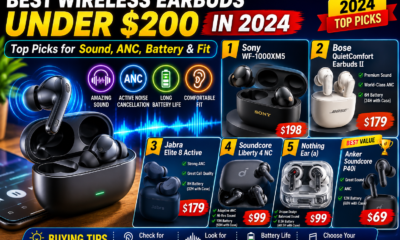
Best Wireless Earbuds Under $200 in 2024: Top Picks for Sound, ANC, Battery, and Fit
-

 Blog3 months ago
Fascisterne: Meaning, History, Symbols, and Modern Use
-

 Tech3 months ago
Do the Driving Modes in Cadillac Lyriq Offer Different Ranges or Battery Usages? Complete Guide to EV Efficiency